


Property Insurance Inspection and Risk Assessment in Ontario, California
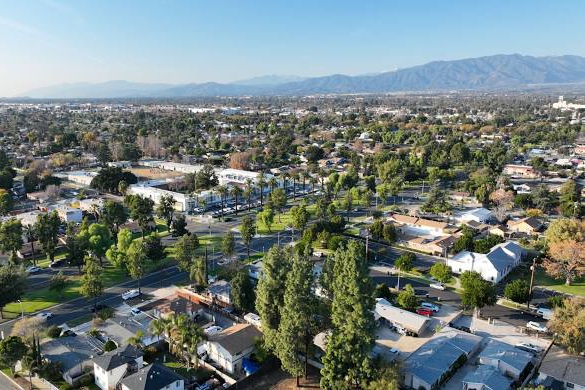
Ontario is a large inland city spanning historic downtown homes, post-war tract, and newer development. For insurance purposes, aging electrical, plumbing, and foundation systems are precisely what carriers flag in Ontario — and a scored, contractor-level risk assessment documents exactly where a property stands.
Risk Scoring Built for Insurance Carriers and Brokers Serving Ontario
Ontario Area Risk Profile: Wildfire, Seismic, Flood, Wind and Crime Exposure
ZIP-level risk data for 91761 (Ontario, San Bernardino County):
Fire Protection
• Low: The area is located in a Local Responsibility Area with a low fire hazard rating. Serviced by the Ontario Fire Department.
Wind and Hail
• Moderate Wind Risk; Low Hail Risk
Earthquake Risk
• High risk. The area is located near several active faults, including the San Andreas, and is susceptible to strong ground shaking.
Crime Risk
• Moderate: The crime rate is in line with or slightly above the national average.
Live Parcel Verification
• Every report additionally verifies the specific parcel against four live California government data layers: CAL FIRE Fire Hazard Severity Zones, CGS liquefaction zoning, FEMA flood zone determination, and CGS tsunami inundation mapping where applicable.
Property insurance carriers do not underwrite Ontario on averages — they underwrite the specific parcel, its systems, and the ground it sits on. Here is what that ground actually looks like.
Ontario is a large inland city spanning historic downtown homes, post-war tract, and newer development, so a risk assessment here ranges across construction eras and conditions. In Ontario, general contractors and risk assessors find raised masonry foundations under the older houses and slab or post-tension foundations on the newer ones, while soils engineers note expansive ground.
During risk evaluations in Ontario we evaluate the older homes for settlement and the seismic bolting and cripple-wall bracing they often lack, while on the newer tracts we focus on slab condition and drainage. Differential settlement from expansive soils is traced through cracking in slabs, stucco, and masonry. Grading and drainage are reviewed across the city, with attention to the newer pads where runoff must be carried clear of foundations. The inland sun stresses roofs and HVAC, so those systems get a hard look for UV wear, flashing, underlayment, and equipment age.
Plumbing in older Ontario homes frequently includes clay sewer laterals prone to root intrusion, galvanized supply lines, and dated wiring with panels near end of life, while newer homes carry more modern systems we still verify. Roof systems — composition and tile — are evaluated for flashing, underlayment, and covering age, with attention to attic ventilation in the heat. Overall, the combination of historic and newer construction, expansive soils, inland heat, and aging systems in the older stock means a contractor-led risk evaluation in Ontario connects foundation behavior, drainage, and original-system condition. This thorough evaluation in Ontario helps buyers and sellers understand a property's real condition across its era and neighborhood.
That construction picture sits on top of measurable exposure. In ZIP 91761, fire protection is rated as follows: Low: The area is located in a Local Responsibility Area with a low fire hazard rating. Serviced by the Ontario Fire Department. Seismic exposure: High risk. The area is located near several active faults, including the San Andreas, and is susceptible to strong ground shaking. Wind and hail: Moderate Wind Risk; Low Hail Risk Crime: Moderate: The crime rate is in line with or slightly above the national average. These are the same ZIP-level factors carriers weigh when they price or decline a policy — and they are documented in the Area Risk Profile of every report, alongside live parcel-level checks against CAL FIRE Fire Hazard Severity Zones, CGS liquefaction and tsunami zoning, and FEMA flood determination.
Every Ontario risk assessment scores the roof, electrical, plumbing, HVAC, and dwelling on a 0-to-65+ scale — Not a Risk, Moderate, Significant, Catastrophic — and pairs those system scores with this geographic exposure data. For San Bernardino County underwriting, that is the difference between a guess and a defensible number, delivered by a CSLB Licensed General Contractor contracting since 1989.